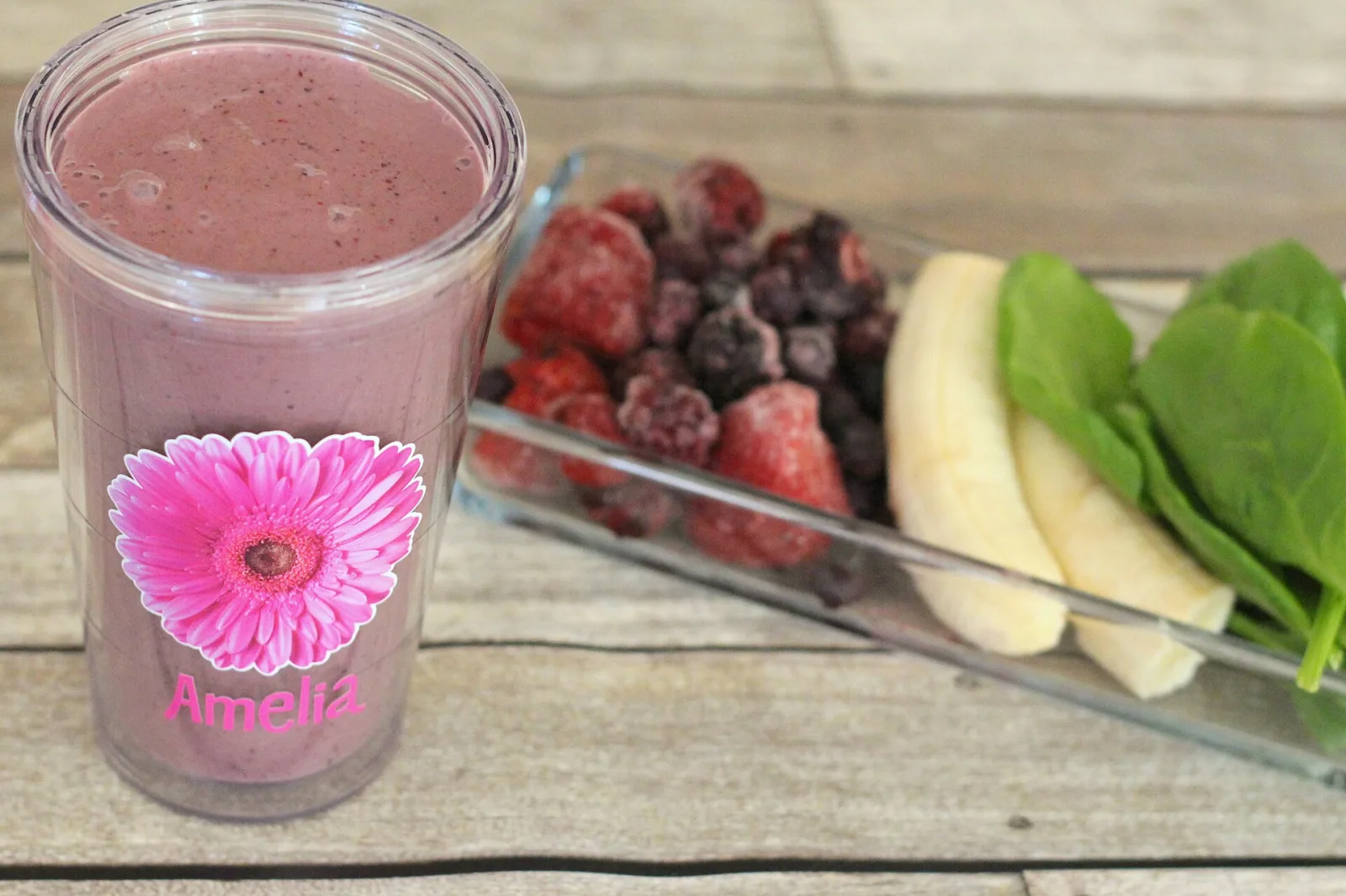
In short:
- The base ratio is 200 g of fruit to 150 ml of liquid, per person.
- Frozen berries beat out-of-season fresh ones, and chill without diluting.
- The brown colour comes from banana and oxidation, not from bad fruit.
- With no added sugar the glass carries 15 to 20 g of sugars, against 35 to 40 g in a shop-bought one.
A berry smoothie rarely fails on fruit flavour, it fails on texture and colour. Too thin, it comes out like warm juice; too thick, the blender spins empty and heats the mixture. And when the shade turns brown, it is almost always down to an ingredient thought to be neutral.
The fruit to liquid ratio, the one thing to remember
For a 350 ml glass, a proper breakfast portion:
| Element | Quantity per person | Role |
|---|---|---|
| Frozen berries | 200 g | flavour, colour, chill |
| Liquid | 150 ml | fluidity |
| Creamy base | 60 to 80 g | body and roundness |
| Sweetener | optional | only judged after tasting |
That 200 to 150 ratio is the balance point. It gives a texture that holds on an upturned spoon for a second or two without blocking the blades.
Below 120 ml of liquid, frozen fruit forms a block the blender cannot pull down: it heats up, and a mixture that heats up loses its point. Above 200 ml, the smoothie becomes a thick juice and the colour visibly lightens.
The general rule on ratios, valid for any fruit, is covered in how to make a smoothie. What follows deals only with what makes berries specific.
Why frozen beats fresh
This is the most counter-intuitive point on the subject, and it holds for most of the year.
Frozen berries are picked ripe and frozen within hours. Fresh raspberries and blueberries sold in February have travelled, so they were picked before ripening: less sweet, less coloured, more acidic. At the same price, the frozen bag makes a more intense smoothie.
The second advantage is mechanical. Frozen fruit chills the mixture without diluting it. Ice cubes do the same job while adding water, which flattens the flavour and lightens the colour. That is why a bar smoothie made from fresh fruit plus ice so often disappoints against its price.
The European berry season runs from June to September. That is the only window where fresh has a real edge, and even then they need blending on the day they are bought.
The brown colour trap
A berry smoothie that comes out brown is not ruined, but it is noticeably less appealing. Two mechanisms stack up.
Banana. It is in half the recipes because it brings creaminess and natural sugar. It also brings a pale yellow which, mixed with the purple-red of berries, gives a dull brown. Half a banana is enough to tip the shade.
Oxidation. The blender folds in air, and the berry pigments, anthocyanins, degrade on contact with it. The longer the blending, the duller the colour.
Three moves fix it:
- Swap banana for Greek yoghurt or frozen mango. Yoghurt gives the same body without touching the colour, mango pulls towards red-orange.
- Blend briefly, thirty to forty seconds, in one go. Blending in several bursts doubles the oxidation.
- Serve immediately. A smoothie left ten minutes on the counter visibly loses colour.
Choosing the liquid
The liquid does not only thin the mix, it decides the final taste.
| Liquid | Effect on taste | Worth knowing |
|---|---|---|
| Whole milk | rounds off acidity | the most neutral, works with any berry |
| Almond drink | light vegetal note | barely sweet, lets the acidity through |
| Apple juice | sweetens sharply | what the industry uses to stretch cheaply |
| Water | masks nothing | for very ripe fruit only |
| Thinned yoghurt | thick texture | the best body, with a tangy finish |
Apple juice deserves a mention of its own. It is the ingredient that most clearly separates a homemade smoothie from an industrial one: cheap, very sweet, and it allows a preparation holding fairly little fruit to be sold as a berry smoothie. Reading the ingredient list on a shop bottle makes the point, apple juice often comes first.
What the glass really carries
A homemade 350 ml berry smoothie with no added sugar holds roughly 15 to 20 g of sugars, banana excluded. All of it comes from the fruit and the dairy.
The same volume bought bottled commonly runs to 35 to 40 g, the equivalent of a soft drink, because of the concentrated fruit juice used as a base. The gap is not about the fruit, it is about what is put around it.
Two points matter more than the sugar total:
- The fibre stays in. Unlike a juice, a smoothie keeps the flesh of the fruit. That fibre slows the passage of sugar into the blood, which changes how the glass behaves at breakfast. The mechanism is covered in the article on a low GI breakfast.
- A smoothie alone does not hold the morning. Even at 350 ml, it lacks protein and fat. With a yoghurt or a handful of homemade granola, it becomes a real breakfast.
The add-ins that change something
Not everything is worth adding. Three ingredients deliver.
Chia seeds
A tablespoon brings fibre and thickens the mixture within ten minutes, by gelling. They do not change the taste. Blend them with the rest to avoid lumps floating on top, unless the grainy texture is what is wanted. Their real value is covered in chia seed benefits.
Greek yoghurt
It is the best effect-for-effort add-in in a berry smoothie. It brings protein, thickens noticeably and rounds off the acidity of raspberries and currants, without touching the colour.
Rolled oats
Two tablespoons turn the drink into a full breakfast. They have to be blended while the fruit is still frozen, otherwise they stay noticeable under the tooth.
Honey and agave syrup, by contrast, are debatable: they add 10 to 15 g of sugars to a glass that already holds plenty. The useful habit is to taste first, not after pouring.
The move that saves the most time
This is the only make-ahead that genuinely works for this drink.
- Weigh the fruit, yoghurt and any seeds into a bag or jar.
- Keep it in the freezer, for up to three months.
- In the morning, tip it into the blender, add the liquid, blend for thirty seconds.
Preparation drops under two minutes, which makes it workable on a weekday. Blending the night before, however, does not work: the smoothie separates into layers and browns.
When serving several people, the smoothie is made last, just before sitting down, for the same reasons of colour and body. Its place in a full service order is covered in the breakfast tray.
Frequently asked questions
What are the ratios for a berry smoothie?
The reference ratio is 200 g of berries to 150 ml of liquid, per person. That is what gives a texture holding on an upturned spoon without jamming the blender. Below 120 ml of liquid the blender spins empty and heats the mixture. Above 200 ml the result is closer to a thick juice and the colour visibly lightens.
Should berries be frozen or fresh?
Frozen makes the better smoothie, and it is not a fallback choice. They are picked ripe and frozen within hours, so they are sweeter and more deeply coloured than fresh berries sold out of season. They also chill the mixture without diluting it, unlike ice cubes, which add water and flatten the flavour.
Why does my berry smoothie turn brown?
Two causes stack up. Banana, present in most recipes, brings a yellow that turns brown against red. And berries oxidise in the air whipped in by the blender, which dulls the pigment. Blending briefly, serving straight away and swapping banana for yoghurt or mango solves it.
How much sugar is in a berry smoothie?
A 350 ml glass with no added sugar holds roughly 15 to 20 g of sugars, all from the fruit and the dairy. That is two to three times less than a shop-bought smoothie of the same size, which commonly reaches 35 to 40 g because it is stretched with concentrated apple juice. Adding honey or agave syrup cancels that gap.
Can a berry smoothie be made the night before?
Blended, no: it separates within hours and oxidises. The portions, however, can be prepped ahead, and that is the real time saving. Weigh the fruit, yoghurt and any seeds into a bag or jar, keep it in the freezer, and pour in the liquid at blending time. Preparation then drops under two minutes.