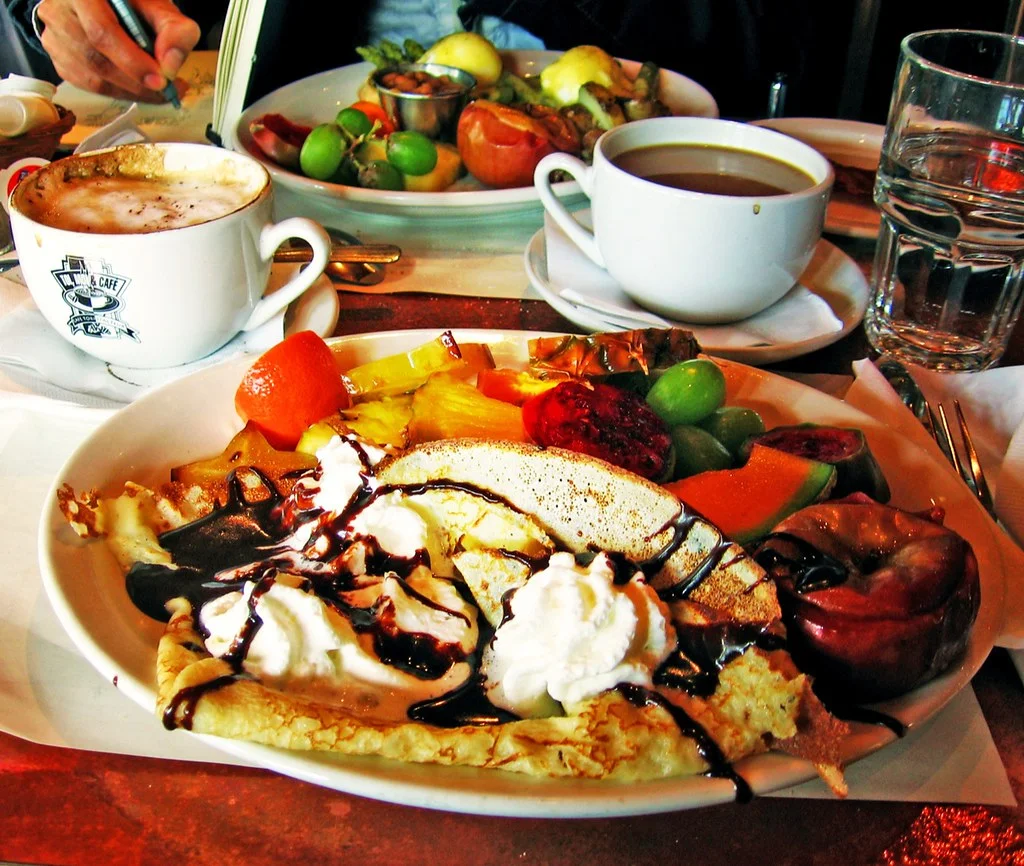
 Photo par moriza via Flickr (CC BY 2.0)
In short:
- Plan two cups per person across a brunch, which is roughly 16 g of ground coffee and 300 ml of water per guest.
- The reference ratio is 55 g of coffee per litre of water, with water between 90 and 96 °C: colder gives sour coffee, hotter gives bitter coffee.
- Milk for a cappuccino is heated to 60 to 65 °C, never more: past that the foam collapses and the taste turns to cooked milk.
- Coffee left on a hot plate turns bitter in twenty to thirty minutes. An insulated bottle holds it for about an hour.
Why coffee is the weak spot of almost every brunch
At brunch, attention goes to the plate. The bread is good, the eggs are lukewarm but fine, the fruit salad is fresh. Then the coffee arrives from a jug that has been sitting on a hot plate for forty minutes, bitter, poured into a cold cup.
It is a strange imbalance, because brunch coffee is the one drink everybody has, often twice, and it costs almost nothing next to the rest of the table. A kilo of decent coffee runs about thirty euros and covers around sixty cups, so 50 cents a cup. On a 25-euro-a-head brunch, it is the cheapest variable to improve.
What usually goes wrong
Three faults come up again and again, and none of them needs extra equipment to fix:
- The coffee is too weak, because the dose is eyeballed with a spoon instead of weighed.
- The water is boiling, poured straight at 100 °C, which extracts the bitter compounds.
- The coffee waits, on a hot plate or in an open jug, and oxidises.
How much coffee to plan per person
The practical question always comes first. The benchmark is two cups per person across the meal, sometimes three if brunch drifts into the afternoon.
| Guests | Cups needed | Water | Ground coffee |
|---|---|---|---|
| 2 | 4 | 600 ml | 33 g |
| 4 | 8 | 1.2 L | 66 g |
| 6 | 12 | 1.8 L | 100 g |
| 8 | 16 | 2.4 L | 132 g |
A brunch cup is 150 ml, not the 80 ml of a bar espresso. That is why the numbers climb quickly. For six guests you need two rounds in a standard one-litre filter machine, which beats brewing a large batch an hour early.
The three settings that actually change the taste
The ratio, the only thing worth weighing
The reference used by the Specialty Coffee Association is 55 g of coffee per litre of water, give or take 10 %. In kitchen terms that is about 8 g per 150 ml cup, roughly one heaped tablespoon.
A ten-euro kitchen scale settles the question for good. It is the one purchase that changes anything, well before any machine.
Water temperature
Water should sit between 90 and 96 °C. A standard kettle stops at 100 °C, so simply wait thirty to forty seconds after it clicks off before pouring. Below 90 °C extraction is incomplete and the coffee tastes sour and thin. Above 96 °C the bitter compounds come out first.
The grind
| Method | Grind | Contact time |
|---|---|---|
| Drip filter machine | medium | 4 to 6 min |
| French press | coarse | 4 min |
| V60, manual pour-over | medium-fine | 2 min 30 to 3 min |
| Moka pot | fine | 3 to 5 min |
| Espresso | very fine | 25 to 30 s |
Coffee ground the day before loses most of its volatile aromas. If a grinder is out of the question, buying ground coffee in small bags and resealing it tightly already makes a noticeable difference.
Which method for how many guests
This is where the real choice happens, and it is about logistics rather than taste. Brunch is served continuously, for two hours, by a host who has other things to do.
- Up to 3 people: any method works, espresso and pour-over included.
- 4 to 8 people: drip filter machine or French press, brewed twice. They are the only methods that produce a litre at once without occupying someone.
- More than 8: drip filter only, decanted straight into an insulated bottle.
Espresso past four guests is a classic trap: at roughly 45 seconds a cup including service, twelve coffees keep one person busy for close to ten minutes, twice during the meal.
Milk, and why home cappuccino fails
Overheated milk is the most common mistake after the ratio. The target is 60 to 65 °C. Above 70 °C the proteins denature, the foam collapses within seconds and cooked milk takes over the flavour.
Without a thermometer, one cue works well: the jug should stay holdable for three or four seconds. Once it burns, it is already too late.
The classic proportions, for reference:
- Cappuccino: one third espresso, one third hot milk, one third foam.
- Latte: one espresso, then three to four times its volume in milk, very little foam.
- Flat white: a double espresso, twice its volume in milk, thin foam.
What to serve alongside the coffee
A brunch on coffee alone gets tiring, especially a long one. Two additions are enough and neither takes work: a large jug of cold water, always, and a juice or a smoothie made the day before. Planning 200 ml of juice per person avoids buying twice what you need.
The rest of the table follows the same logic of preparation: see what brunch actually is and what goes on the table for the overall spread, and the exact timing for a poached egg for the savoury part, which is the only thing that has to be made to order.
For guests who avoid gluten, coffee is not an issue, but what goes with it is: that is covered in the gluten-free breakfast guide.
Frequently asked questions
What coffee should you serve for brunch at home?
A mild filter coffee, made in volume, is the safest choice for brunch: it brews for six people at once, it works with milk, and it does not tie up the kitchen. Use 55 g of ground coffee per litre of water, roughly 8 g per 150 ml cup, with water between 90 and 96 °C. If you insist on espresso, expect a home machine to deliver about one cup every 45 seconds including service, which gets long past four guests.
How much coffee do you need per person for brunch?
Plan two cups per person across the meal, which is about 300 ml of coffee and 16 g of ground coffee per guest. For six people that means roughly 2 litres of water and 100 g of coffee. Since brunch runs two to three hours, brew twice rather than leaving a pot sitting on a hot plate.
What temperature should milk be for a cappuccino?
Between 60 and 65 °C. Above 70 °C the milk proteins denature, the foam collapses and the taste turns cooked. Without a thermometer the cue is simple: you should still be able to hold the jug in your hand for a few seconds.
Can you make coffee ahead of time for brunch?
Yes, as long as you keep it off a hot plate, which turns it bitter within twenty to thirty minutes. Poured into an insulated bottle, coffee holds up for about an hour with no noticeable loss.
Do you need a grinder to make good coffee for brunch?
It is not the first useful purchase. Weighing the coffee and watching the water temperature change the result more than a grinder does, for ten euros against eighty to a hundred and fifty. A grinder becomes worthwhile afterwards, once the other two settings are in place.