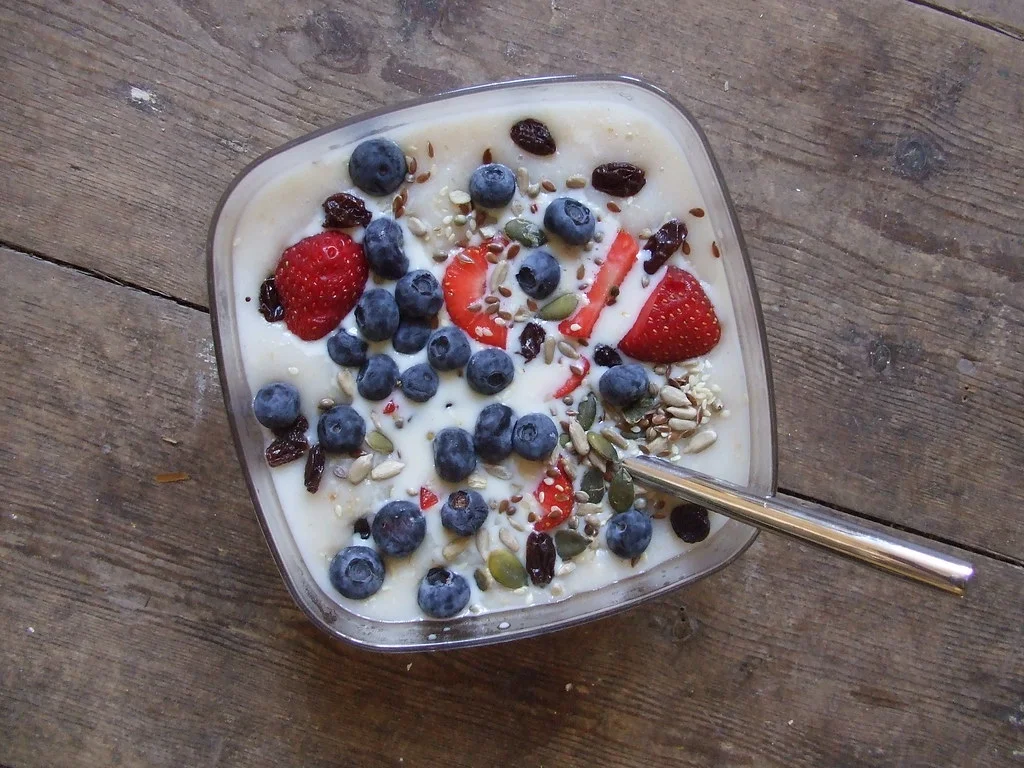
 Photo par Denna Jones via Flickr (CC BY 2.0)
In short:
- The naturally gluten-free bases are rice, maize, buckwheat, millet, quinoa, chestnut and potato, plus eggs, dairy, fruit and nuts.
- Oats are the main trap: naturally gluten free, but very often contaminated during harvest and milling.
- The gluten-free label is regulated in Europe: it guarantees a level below 20 mg per kilo.
- At brunch, losing bread and pastries empties the table: the savoury side is rebuilt on eggs, which pose no problem.
This article describes food options, not a medical protocol. Coeliac disease requires diagnosis and follow-up by a healthcare professional, and nothing below replaces that.
What remains possible, which is a lot
When gluten leaves breakfast, what actually disappears is a single family: wheat, barley, rye and spelt, so bread, pastries, most industrial cereals and biscuits.
Everything else stays. The naturally gluten-free bases are more numerous than people assume:
- Cereals and pseudo-cereals: rice, maize, buckwheat, millet, quinoa, sorghum, teff.
- Flours: chestnut, rice, buckwheat, chickpea, almond, coconut.
- Beyond cereals: eggs, dairy, fresh fruit, nuts, seeds, potato.
A gluten-free breakfast is therefore not about removing without replacing, which is the most common mistake and the one that makes mornings bleak.
The case of oats, which deserves its own paragraph
This is where nearly everyone gets it wrong, in both directions.
Oats contain no gluten in the strict sense: their storage protein, avenin, differs from that of wheat. But oats are grown, harvested, transported and milled in the same channels as wheat and barley. Cross-contamination is the rule rather than the exception.
In practice, a standard pack of oat flakes offers no guarantee. Only packs carrying the gluten-free label are tested, against a European regulatory threshold of 20 mg of gluten per kilo. That figure, and only that figure, is what gives the label its value.
Alternatives that sidestep the question
| Base | Naturally gluten free | Contamination risk |
|---|---|---|
| Buckwheat flakes | yes | low |
| Rice flakes | yes | low |
| Quinoa flakes | yes | low |
| Oat flakes | yes | frequent, check the label |
| Shop muesli | no | almost always contains wheat |
Four breakfasts that actually keep you going
The classic complaint about gluten-free mornings is that they do not hold. It is often true when the meal rests on puffed rice or rice bread alone, both low in protein and fibre. The fix is simple: add a protein and a fat.
- Buckwheat porridge: 40 g of buckwheat flakes, 200 ml of milk or plant drink, cooked 5 minutes, with a spoon of almond butter and a piece of fruit.
- Scrambled eggs and buckwheat bread: two eggs, a slice of 100 % buckwheat bread, half an avocado.
- Chestnut-flour pancakes: chestnut brings flavour and a soft crumb, where rice flour alone stays sandy. The general method is in the light pancakes guide, simply swapping the flour.
- Yoghurt, fruit and nuts: 150 g of yoghurt, a seasonal fruit, 20 g of walnuts or almonds, a spoon of chia seeds.
The satiety benchmark
A breakfast that holds until lunch generally contains at least 15 g of protein. Two eggs provide about 13 g, 150 g of plain yoghurt about 6 g, 20 g of almonds about 4 g. That is the most effective lever, more than total quantity.
Label traps
Three products mislead regularly, because nothing in their name suggests wheat:
- Puffed cereals with barley malt, very common in corn flakes, which therefore contain gluten despite a maize base.
- Pancake mixes and shop preparations, almost always wheat based.
- Some syrups and sweet sauces, where malt is used as a flavouring.
Reading the ingredient list stays the only reliable reflex: in the European Union, gluten-containing cereals must be highlighted in the list, usually in bold.
Hosting a gluten-free guest at brunch
This is the concrete problem, because brunch leans heavily on bread and pastries. When that base goes, the table empties for the person concerned, who is often the only one leaving hungry.
Three decisions are enough:
- Build the savoury side on eggs, which pose no problem and already carry most of the table. Timings are detailed in the poached egg guide.
- Buy buckwheat or rice bread the day before, and serve it separately to avoid crumbs from the shared bread board.
- Plan a fruit salad as the sweet option, which suits everyone with no dedicated preparation.
The overall composition of a brunch table is covered in the article on what brunch is, and drinks need no adaptation, as explained in the brunch coffee guide.
Frequently asked questions
What can you eat for breakfast when you avoid gluten?
The naturally gluten-free bases are rice, maize, buckwheat, millet, quinoa, chestnut and potato, alongside eggs, dairy, fruit and nuts. In practice that means buckwheat porridge, chestnut-flour pancakes, eggs with buckwheat bread, or a bowl of fruit with yoghurt and nuts. The one thing to watch is oats: naturally gluten free, but very often contaminated by neighbouring cereals during harvest and milling.
Do oats contain gluten?
Oats contain no gluten in the strict sense, but they are frequently contaminated with wheat, barley or rye during growing, transport and milling. Only packs carrying the gluten-free label guarantee a level below 20 mg per kilo, the European regulatory threshold.
Is porridge gluten free?
Not automatically. Classic porridge uses oat flakes, which must carry the gluten-free label to be safe. Porridge made from buckwheat, rice or quinoa flakes avoids the question entirely.
What should you plan for a gluten-free guest at brunch?
The bread and pastry base disappears entirely, which empties the table if nothing is planned. The simplest approach is to build the savoury side on eggs, which pose no problem at all, add a buckwheat or rice bread bought in advance, and serve fruit salad as the sweet option.
Are corn flakes gluten free?
Usually not. The base is indeed maize, but most shop corn flakes contain barley malt as a flavouring, and therefore gluten. You have to read the ingredient list, where the cereals concerned are highlighted.