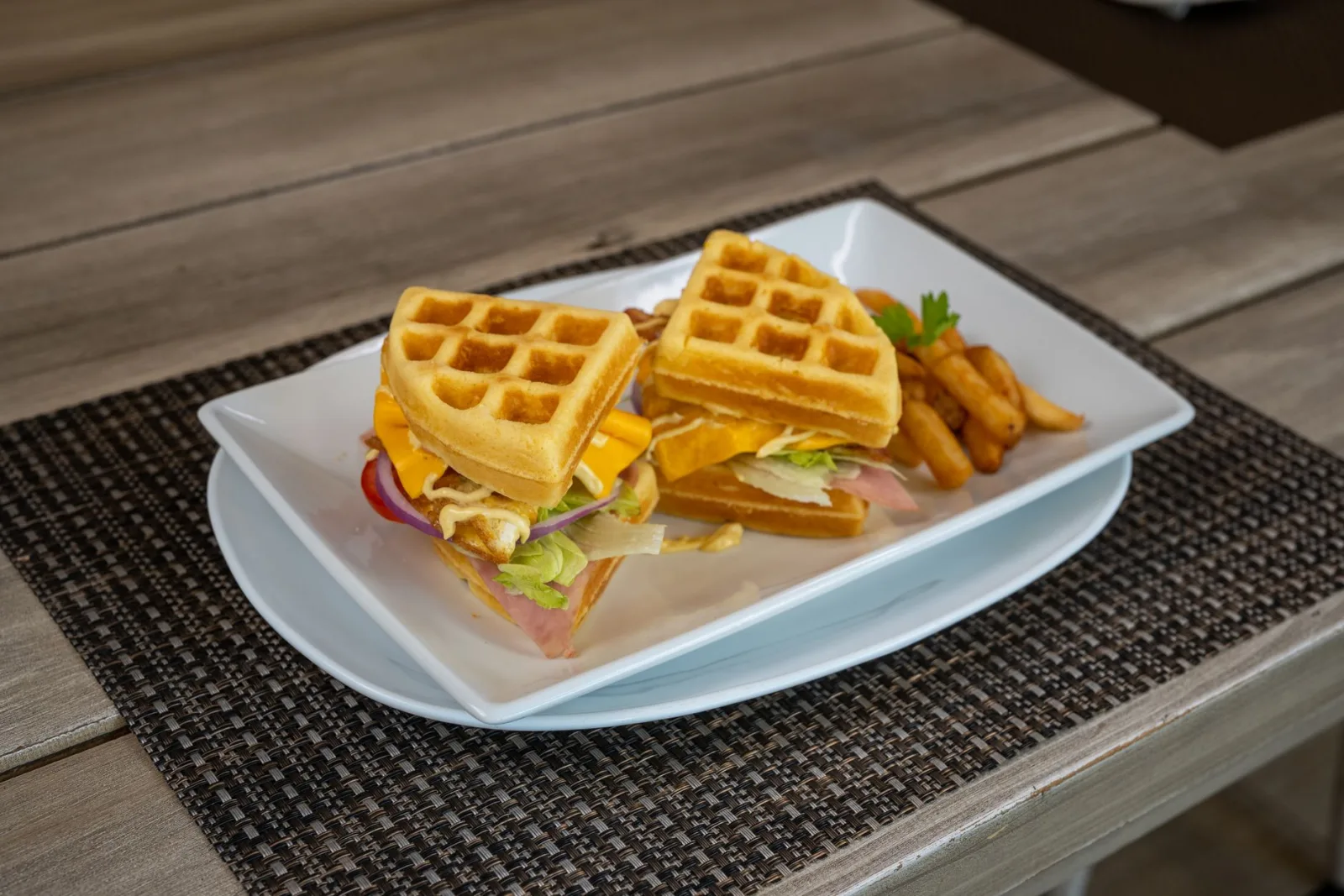
In short:
- Ham and cheese waffles are made with a sugar-free waffle batter, salted and peppered.
- For eight waffles: 250 g of flour, 3 eggs, 350 ml of milk, 80 g of butter, 100 g of grated cheese, 150 g of ham.
- Cheese in the batter sticks: a very hot iron, plates oiled every two waffles.
- Three ways to fill them: in the batter, between two waffles croque-style, or on top for cured ham.
Ham and cheese waffles are the simplest savoury version of a waffle, and one of the most effective at brunch: they can be made ahead, eaten by hand and cost a few euros for a whole table. The recipe rests on a single principle, a waffle batter with the sugar taken out, and on a few precautions so the cheese browns instead of sticking.
The savoury batter, for eight waffles
| Ingredient | Quantity | Note |
|---|---|---|
| Plain flour | 250 g | |
| Baking powder | 1 sachet, 11 g | |
| Salt | 1 teaspoon | the ham and cheese add salt too |
| Eggs | 3 | |
| Milk | 350 ml | whole milk ideally |
| Melted butter | 80 g | or 60 ml of neutral oil |
| Grated cheese | 100 g | comté, emmental or gruyère |
| Cooked ham | 150 g, about 4 slices | cut into 5 mm dice |
| Pepper, nutmeg | a pinch |
No sugar. That is the difference between a sweet batter and a savoury one, and it has a second advantage: sugar caramelises and sticks to the plates, so leaving it out partly offsets the cheese, which does stick.
- Mix the flour, baking powder and salt in a bowl.
- Make a well, add the eggs and start whisking while pouring in the milk little by little, to avoid lumps.
- Stir in the lukewarm melted butter, then the pepper and nutmeg.
- Add the cheese and ham last, with a spatula.
- Rest for 15 to 30 minutes. The flour hydrates, the batter thickens slightly and holds better in the iron.
For a lighter waffle, the eggs can be separated and the whites whisked to stiff peaks and folded in at the end. The method and the other levers of crispness, starch included, are covered in the article on crisp and fluffy waffles. They apply as they are to the savoury version.
Choosing the cheese
The cheese decides the texture as much as the flavour.
- Comté, emmental, gruyère: cooked pressed cheeses that melt without releasing water and brown on contact with the plate. Comté has the most flavour, emmental is the stringiest.
- Cheddar or mimolette: also work, with a stronger colour.
- Mozzarella: avoid it in the batter. It releases a lot of water and makes the waffle soft.
- Parmesan: the crust trick. A spoonful sprinkled straight onto the hot plate, with the batter poured on top, gives a very crisp surface of grilled cheese.
Beyond 100 g of cheese for this amount of batter, the waffle becomes heavy and sticks more and more.
Choosing the ham
Cooked ham is the right choice for the batter. Cut into small 5 mm dice and patted dry with kitchen paper, it spreads through the whole waffle without creating pockets of water. Bigger pieces leave holes in the waffle and come away when it is cut.
Cured ham does not go into the batter. In the iron, it dries out and concentrates its salt. It is laid on the cooked waffle, in thin slices, at serving time.
Three ways to fill them
| Method | How | Result |
|---|---|---|
| In the batter | ham and cheese mixed into the batter | even waffle, eaten by hand, the simplest for a group |
| Croque-style | two plain savoury waffles, ham and cheese between them, back in the iron for a minute | stringy cheese, soft centre, the most indulgent |
| On top | plain cheese waffle, cured ham and toppings added cold | the freshest, closest to an open sandwich |
The croque version needs slightly thinner waffles, otherwise the whole thing gets thick and hard to eat. It is the one most often found on brunch menus, served with salad.
The on-top version follows the logic of savoury toast: a crisp base, a topping added at the last moment. With cured ham, rocket and a drizzle of olive oil, it takes two minutes once the waffles are cooked.
Cooking
- Preheat the waffle iron for at least ten minutes. A lukewarm plate makes a pale, soft waffle that sticks.
- Brush the plates with oil before the first waffle, then every two waffles. With cheese in the batter, this step is not optional, even on a non-stick coating.
- Do not overfill. The batter rises and overflows, and cheese running over the edges burns.
- Allow 4 to 5 minutes depending on the iron, without opening. A waffle that resists opening is not cooked: close it again for a minute.
Serving at brunch
A savoury waffle straight from the iron goes soft within minutes if stacked: the steam gets trapped. Laying them flat on a rack, in a 100 °C oven, keeps them hot and crisp while the whole batch cooks.
To make a complete plate:
- An egg on top, poached or fried. The runny yolk acts as a sauce. The poached egg timing can be lined up with the last waffle.
- A salad dressed with a mustardy vinaigrette, which cuts through the richness of the cheese.
- A dip of fromage frais, chives and lemon.
To drink, a filter coffee or a small glass of squeezed juice goes better with savoury food than hot chocolate. For the juice, the guidance on orange juice in the morning applies at brunch too.
What it costs, home versus brunch
A filled savoury waffle commonly sells for 12 to 16 euros on a brunch menu, often with a salad. At home, the recipe’s ingredients, ham and comté included, come to about 5 to 6 euros for eight waffles, less than a euro per waffle. It is one of the brunch dishes with the biggest gap, for a technique that needs nothing more than a waffle iron.
The mistakes that ruin ham and cheese waffles
- Keeping the sweet batter of a classic recipe. Sugar and cheese together taste off and make a waffle that sticks.
- Salting like a plain batter. Ham and cheese already bring plenty of salt: one teaspoon for the whole batter is enough.
- Cutting the ham too big. The pieces leave holes and fall out.
- Using mozzarella in the batter: the waffle stays soft.
- Stacking the waffles while waiting to serve. The steam makes them soggy in five minutes.
Frequently asked questions
How do you make a savoury waffle batter?
For eight waffles: 250 g of flour, one sachet of baking powder, one teaspoon of salt, 3 eggs, 350 ml of milk and 80 g of melted butter, with no sugar at all. Sugar is what separates a sweet batter from a savoury one, and leaving it out also makes the waffle less likely to stick to the iron. A little pepper and a pinch of nutmeg are enough to season it.
Which cheese goes into ham and cheese waffles?
A cooked pressed cheese that melts and browns: comté, emmental or gruyère, at 100 g grated for eight waffles. Mozzarella releases too much water and makes the waffle soft. A spoonful of grated parmesan sprinkled straight onto the plate, under the batter, gives a very crisp crust of grilled cheese.
Should the ham go into the batter or into the waffle?
Both work, with different results. Cut into small dice and mixed into the batter, the ham spreads through the whole waffle, which can be eaten by hand. Slipped between two waffles with the cheese, croque-monsieur style, it stays tender and the cheese gets stringier. Cured ham is kept for the end, laid on the cooked waffle: in the iron, it dries out and becomes too salty.
How do you stop savoury waffles sticking to the iron?
The cheese in the batter melts on contact with the plate and sticks. Preheat the waffle iron well, brush the plates with oil before the first waffle and then every two waffles, and do not open it before the end of cooking. A waffle that resists opening is not yet cooked: close it again for a minute.
Can ham and cheese waffles be made ahead?
Yes. Cooked the day before, they keep for two days in the fridge and reheat in five minutes in a 180 °C oven or a toaster, which brings back their crispness. They also freeze very well, separated by baking paper. The raw batter, however, does not keep for more than a few hours, as the baking powder loses its effect.