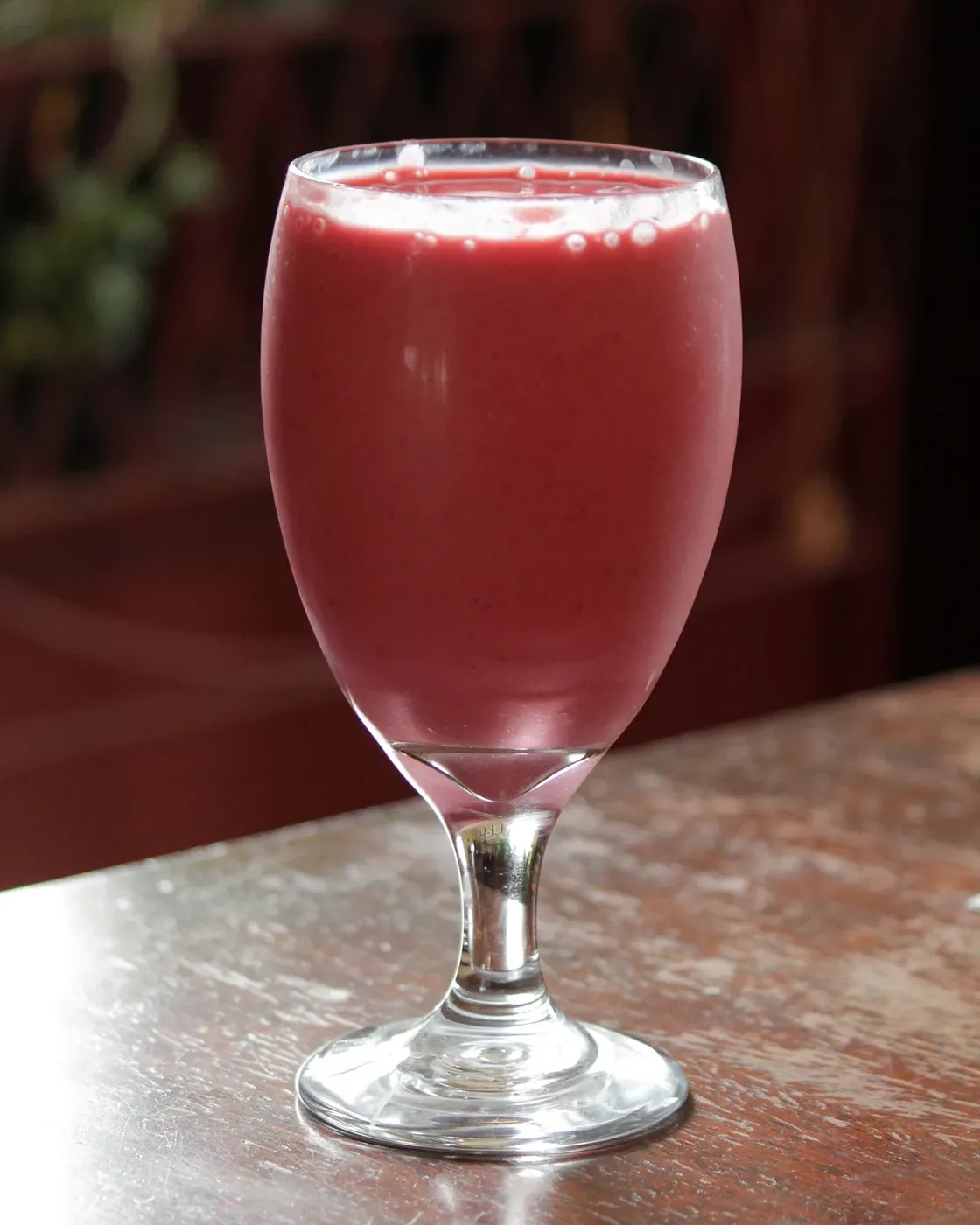
In short:
- The reference proportion is roughly two thirds fruit to one third liquid, or 250 g of fruit for 120 to 150 ml of liquid per glass.
- At least half the fruit must be frozen. Thickness comes from the cold, not from the amount of fruit.
- Ice cubes dilute, frozen fruit does not. That is the main difference between a bar smoothie and a failed homemade one.
- Filling order matters: liquid at the bottom, frozen at the top, otherwise the blades spin in an air pocket.
Knowing how to make a smoothie is not a matter of recipe but of proportion. Most failed attempts come from the same move: too much liquid poured at the start, ice cubes added to fix it, and a drink that ends up somewhere between lukewarm juice and fruit soup. The recipe matters little, the ratio between elements decides everything.
What a smoothie is, and what separates it from juice
The distinction is not cosmetic. Juice separates the liquid from the pulp and leaves the fibre behind. A smoothie blends the whole fruit, fibre included, and adds a liquid to it.
Two practical consequences:
- The texture is thick by construction, since nothing is removed. A smoothie that pours like juice is a badly measured smoothie.
- It is more filling than a juice of the same volume, because the fibre stays in the glass.
That is also why a smoothie earns its place in a breakfast, where juice only accompanies. On the broader question of what to serve in the morning and in what quantity, the breakfast tray gives the per-person benchmarks.
The proportion that decides everything
Here is the base to remember, for one large glass of about 400 ml.
| Element | Quantity | Role |
|---|---|---|
| Fruit, half of it frozen | 250 g | body and flavour |
| Liquid | 120 to 150 ml | makes blending possible |
| Creamy element, optional | 40 to 60 g | thickens without diluting |
| Sweetener, optional | 1 teaspoon | only if the fruit is sharp |
The key point is the two-thirds to one-third ratio between fruit and liquid. Below 120 ml the blender struggles and the mix rises into a dome without falling back. Above 150 ml the texture tips towards juice and never comes back.
Sugar is almost never needed. A ripe banana, dates or a pear bring enough sweetness, and those same fruits provide the creaminess.
A cue for correcting mid-blend
The mix should turn with a steady vortex in the centre. If it turns with no visible dip, it is short of liquid, to be added by the tablespoon and not by the glass. If it splashes the sides and stays runny, it is too late to remove liquid: frozen fruit has to go in.
Cold makes the thickness, ice cubes do not
This is where the gap opens between a counter smoothie and the one that fails at home.
An ice cube is water. While blending, most of it melts and joins the liquid already there. The result is cold, but runnier than at the start, and the fruit flavour is diluted along the way.
Frozen fruit brings exactly the same cold without a single extra drop of water. It even thickens the mix, since frozen pulp behaves like a solid until it melts.
The practical rule fits in one sentence: freeze the fruit, never the water. An overripe banana sliced into rounds and put in the freezer is the best thickener there is, and it costs nothing.
The order to fill the blender
This order is not a preference, it follows from how the machine works.
- Liquid first, at the bottom, against the blades. It starts the rotation.
- Soft ingredients next: yoghurt, fresh banana, ripe fruit, oats.
- Hard and frozen items last, so at the top.
The blades create a vortex that pulls the contents downwards. If the frozen items sit at the bottom, they jam the blades from the start, the motor spins in an air pocket and the mix never comes down. That is the most common cause of a smoothie stuck in a dome in the jug.
Blend for about 45 to 60 seconds, starting on low speed then increasing. Blending too long warms the mix through friction, which undoes the work of the cold.
Four bases that work
Each line makes one glass of about 400 ml, following the proportion above.
| Base | Fruit | Liquid | Creamy |
|---|---|---|---|
| Berries | 150 g frozen berries, 100 g banana | 130 ml milk or plant drink | 2 spoons of yoghurt |
| Mango | 250 g frozen mango | 140 ml orange juice | none, the mango is enough |
| Green | 120 g fresh spinach, 130 g frozen pineapple | 150 ml coconut water | half a banana |
| Chocolate and banana | 250 g frozen banana | 120 ml milk | 1 spoon unsweetened cocoa |
These four bases can be varied endlessly, provided you keep the proportions and swap a fruit for another of the same nature, a juicy fruit for a juicy fruit, a dense fruit for a dense fruit.
The mistakes that produce lukewarm soup
- Pouring the liquid by eye. This is mistake number one, and it cannot be undone: you can always add, never remove. Start at 120 ml.
- Using only fresh fruit. The mix will taste good but stay runny and at room temperature.
- Blending too long. Past a minute and a half, friction warms the mix and the foam collapses.
- Using fruit juice as the main liquid. It stacks sugars and masks the taste of the blended fruit. Water, milk or a plant drink let the fruit speak.
- Filling the jug to the brim. The volume grows while blending, so leave a third empty.
Where a smoothie belongs in the meal
Served on its own, a 400 ml smoothie is still a fruit drink, so heavy in sugars even with none added. Paired with a source of protein it becomes a real breakfast: an egg, Greek yoghurt, a handful of nuts.
That is exactly the logic set out in the low GI breakfast, where the point is not to remove sugar but to slow it down. For something crunchy alongside the glass, homemade granola can be made ahead and keeps for several weeks. And if the smoothie replaces juice on a brunch table, there remains the question of brunch coffee, almost always the weak point of the spread.
Frequently asked questions
What are the right proportions for a smoothie?
The working base is roughly two thirds fruit to one third liquid, which comes to about 250 g of fruit for 120 to 150 ml of liquid per glass. At least half the fruit should be frozen: thickness comes from the cold, not from the amount of fruit. An optional creamy element such as half a banana or two spoons of yoghurt thickens the mix further without adding liquid.
Should you put ice cubes in a smoothie?
No, ice cubes are usually a mistake. They chill the mix but melt while blending and dilute it, which gives a cold yet runny drink. Frozen fruit delivers the same cold without adding water, and that is what separates a thick smoothie from iced juice.
In what order should the blender be filled?
Liquid first, right at the bottom, then soft ingredients, then hard and frozen items last, so at the top. Liquid against the blades starts the rotation and creates the vortex that pulls everything else down. In the reverse order, frozen fruit jams the blades and the motor spins in an air pocket.
What is the difference between a smoothie and a juice?
Juice separates the liquid from the pulp and leaves the fibre behind, whereas a smoothie blends the whole fruit, fibre included. That explains the thick texture and why a smoothie is more filling than a juice of the same volume.
Can a smoothie be made the night before?
It keeps for about twenty-four hours in the fridge in a sealed container filled to the brim, but it separates and loses its foam. The better way to prepare ahead is to weigh the fruit and freeze it in single portions: in the morning, all that is left is to pour the liquid and blend.