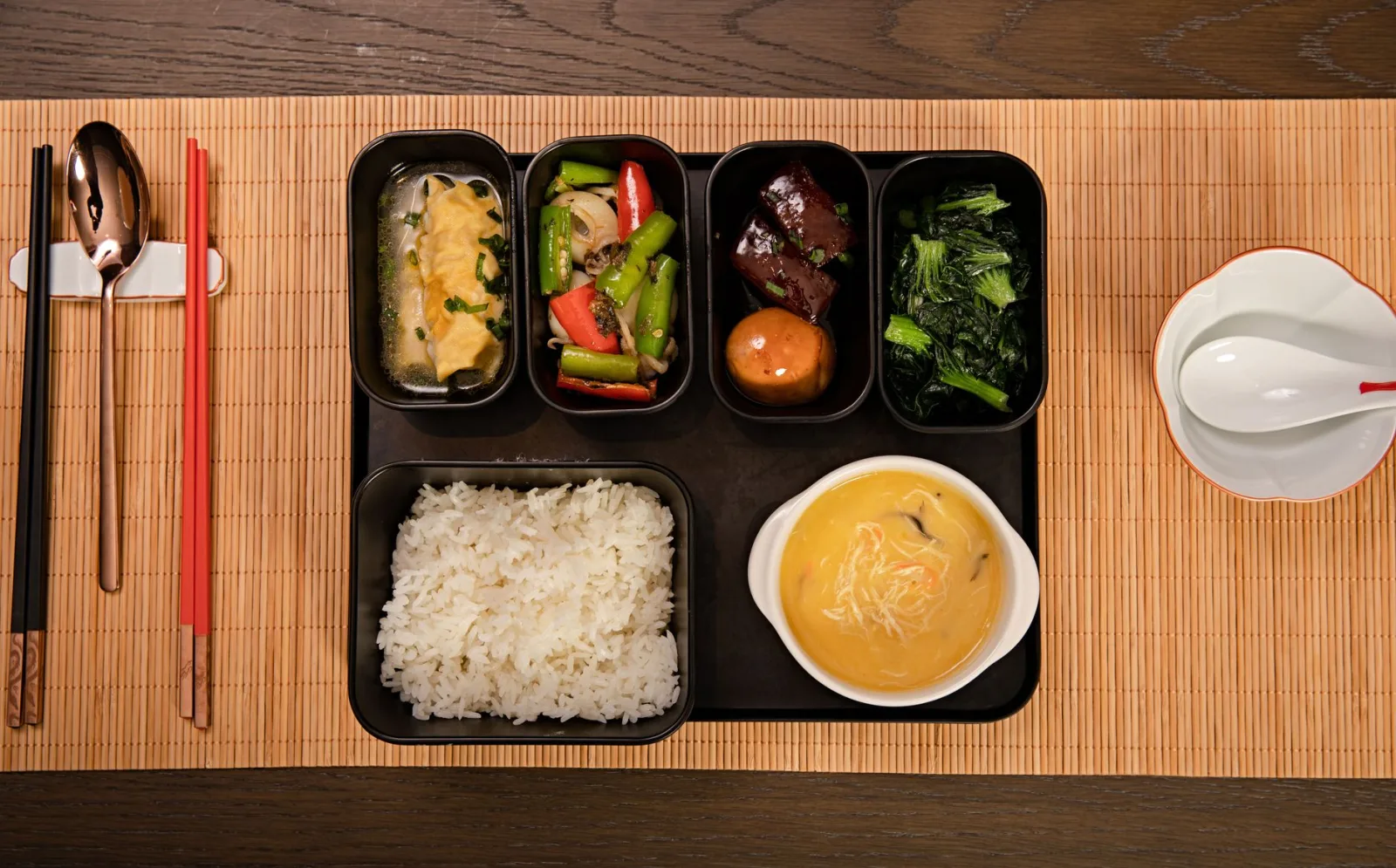
In short:
- The model is ichiju-sansai: one soup, three dishes, and a bowl of rice.
- Everything is savoury; there is no sweet element in the traditional set.
- Miso is stirred in off the heat, never into stock that is boiling.
- The set comes to 3 to 4 g of salt, half the recommended daily intake.
A Japanese breakfast is the morning meal that least resembles anything eaten in Europe: nothing on it is sweet, it consists of four to six small dishes served together, and it is closer to a light lunch than to a breakfast.
Ichiju-sansai, the model behind it
The composition follows an old and legible rule: ichiju-sansai, literally one soup and three dishes, around a bowl of rice.
| Element | Japanese name | Role |
|---|---|---|
| White rice | gohan | the base, served in its own bowl |
| Miso soup | miso shiru | the hot liquid, drunk from the bowl |
| Grilled fish | yakizakana | the main protein |
| Pickled vegetables | tsukemono | acidity and crunch |
| Egg | tamago | rolled, poached, or raw over the rice |
Added to that are sheets of nori, the dried seaweed you dip in soy sauce and wrap around a mouthful of rice, and green tea served throughout.
The rice is not a side dish but the centre: everything else is designed to be eaten with it, in alternating mouthfuls. That is why each dish tastes quite salty taken on its own.
The dishes, one by one
The rice. Short-grain Japanese rice, rinsed until the water runs clear, then boiled with no salt and no fat. It is served plain, never seasoned: seasoned rice becomes sushi rice, which is a different dish altogether.
The miso soup. A dashi stock, made from kombu seaweed and dried bonito flakes, into which fermented soybean paste is dissolved. Diced tofu, wakame seaweed and sometimes spring onion go in. It is drunk from the bowl, without a spoon, the solid pieces picked out with chopsticks.
The grilled fish. Usually mackerel, saba, or salmon, salted half an hour ahead and grilled skin side down. The salting is not only seasoning: it draws out surface moisture and lets the skin crisp.
The tsukemono. Pickled vegetables, daikon, cucumber or aubergine, both very salty and very sharp. They do exactly what a cornichon does on a charcuterie plate: they cut the richness.
Natto. Fermented soybeans, stringy and pungent. It divides opinion in Japan itself, and it is in no way compulsory.
What it comes to
| Nutrient | Value for a full set |
|---|---|
| Energy | 450 to 600 kcal |
| Carbohydrate | around 60 g, almost entirely the rice |
| Protein | 25 to 30 g |
| Fat | 10 to 15 g |
| Salt | 3 to 4 g |
The two figures that matter are the last ones. Very little fat, which clearly separates this breakfast from a pastry-based set or from eggs and bacon. And a lot of salt, accumulated across the soup, the pickles and the salted fish.
The near-total absence of simple sugars makes it close to what a low-GI breakfast is after, with one caveat: white rice has a high index of its own, tempered here by the protein and fibre served alongside it.
The version that works at home
Reproducing the whole set on a Tuesday morning makes no sense. Three elements are enough for something honest.
Yesterday’s rice. This is the key to the timing. Japanese rice cooked the day before and reheated for two minutes in the microwave with a spoonful of water is perfectly good. Cooked the same morning it takes 45 minutes between rinsing, soaking, cooking and resting.
Miso soup in ten minutes. Powdered dashi dissolved in hot water, brought to a bare simmer with diced tofu and rehydrated wakame. Pan off the heat, dissolve a tablespoon of miso paste in a ladleful of stock, then stir it back in. This is the step that decides everything: miso never boils.
Pan-fried salmon. Without a grill, salt a fillet twenty minutes ahead, wipe it dry, then fry skin side down over medium heat for six or seven minutes without touching it, and two minutes on the other side.
With the rice already cooked, the whole thing takes a quarter of an hour. Miso paste keeps six months in the fridge, powdered dashi a year.
Where to find the ingredients
Miso paste, dashi, wakame and short-grain rice are sold in Asian grocers and, these days, in the world food aisle of most supermarkets. Two useful markers: white miso (shiro) is mild and suits everything, red miso (aka) is far stronger and fermented for longer. Start with white.
The only purchase that really warrants a specialist shop is the rice: ordinary long-grain rice does not cling and is awkward to eat with chopsticks.
How it is served
All the dishes arrive at the same time, in small separate bowls, never on a single plate. The arrangement is fixed: rice on the left, soup on the right, dishes behind.
You do not finish one bowl before moving to the next: you alternate, a mouthful of rice, a sip of soup, a piece of fish. That alternation is what balances the saltiness, and it is what makes the set coherent when each dish on its own tastes heavily seasoned.
This logic of small simultaneous dishes brings the Japanese breakfast close to a Turkish breakfast, which rests on the same principle of multiplicity with a radically different relationship to sugar. In both cases we are a long way from a single plated set, as the definition of brunch makes clear.