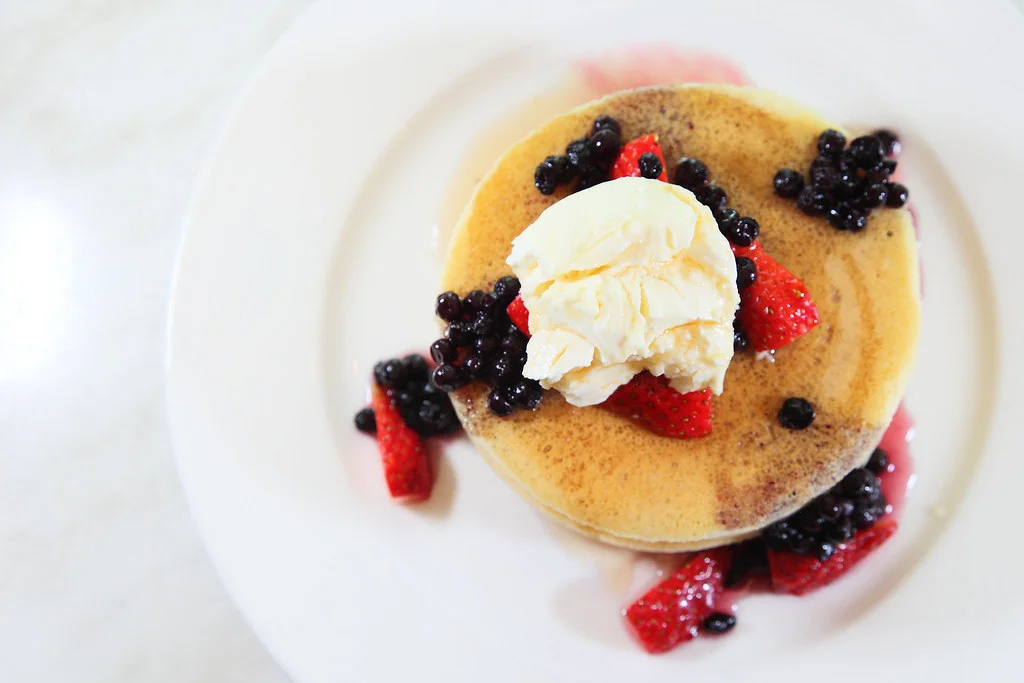
 Photo par LeonardKong via Flickr (CC BY 2.0)
In short:
- The batter must stay lumpy: every extra stir develops gluten and makes the pancake rubbery rather than soft.
- A 20 to 30 minute rest hydrates the flour and relaxes the gluten, the single biggest texture gain for no effort.
- Cook over medium heat, around 180 °C: flip when the surface bubbles burst and stop closing, after 2 to 3 minutes.
- The base ratio is 250 g flour, 11 g baking powder, 300 ml milk and 2 eggs, for about a dozen pancakes.
The base recipe, in ratios
A good pancake needs no special equipment and no special ingredient. The ratios and three moves make the difference, not the shopping list.
| Ingredient | Quantity | Role |
|---|---|---|
| Plain flour | 250 g | structure |
| Baking powder | 11 g | rise |
| Sugar | 30 g | colour and taste |
| Salt | 3 g | taste |
| Milk | 300 ml | hydration |
| Eggs | 2 | binding and softness |
| Melted butter | 30 g | suppleness |
These quantities give about a dozen 10 cm pancakes, enough for four people at a brunch where other things are served.
The three moves that make light pancakes
Mix as little as possible
This is the most counter-intuitive point and by far the most important. Pancake batter should not be smooth.
The principle is the same as for crêpe batter worked too long: the whisk develops the gluten network, which creates elasticity. In bread that is the goal. In a pancake it is exactly what you do not want, because that elasticity fights the rise and produces a rubbery texture.
In practice: pour the wet over the dry, stir about ten times, and stop while visible lumps remain. They disappear during cooking.
Rest the batter
A 20 to 30 minute rest at room temperature does two things. It lets the flour hydrate fully, which removes the raw flour taste, and it relaxes the gluten formed during mixing.
Beyond an hour the effect reverses: baking powder, activated on contact with liquid, starts losing its rising power. Batter made the night before gives flat pancakes.
Cook at the right temperature
The pan should be at medium heat, around 180 °C. Without a thermometer the cue is reliable: a drop of water thrown on the surface should sizzle and evaporate in two to three seconds. If it vanishes instantly, the pan is too hot.
When to flip is judged by eye, not by clock: turn when the surface bubbles burst and stop closing, generally after 2 to 3 minutes. The second side needs about 1 minute 30.
Why pancakes fail, and how to fix them
| Symptom | Most likely cause | Fix |
|---|---|---|
| Flat pancakes | over-mixed batter, or old baking powder | stop at the lumps, replace the powder |
| Rubbery texture | gluten overdeveloped | less whisking, more resting |
| Brown outside, raw inside | pan too hot | drop to medium heat |
| Dry pancakes | too much flour, or overcooked | weigh the flour, flip at the bubbles |
| Pancakes that spread | batter too thin | add 20 g of flour, no more |
Baking powder deserves a special mention: opened more than six months ago, it loses part of its rising power with nothing to signal it. It is the most common silent cause of flat pancakes.
The variants that genuinely work
Two changes give a noticeably lighter result without changing the method:
- Replace 100 ml of milk with fromage blanc or yoghurt. The acidity reacts with the baking powder and produces extra rise. This is the most effective variant.
- Whip the egg whites and fold them in last, gently. The gain is real but it adds five minutes and extra washing up, which is debatable on a Sunday morning.
For a gluten-free brunch, chestnut flour or a chestnut and rice blend gives a good result, where rice flour alone stays sandy. The basics are covered in the gluten-free breakfast guide.
Serving them at the right moment
Pancakes are the one sweet brunch item that tolerates waiting. Cooked ahead, they keep for 20 to 30 minutes in an oven at 60 °C, stacked and covered with a cloth, without turning rubbery.
That is what lets you make them before guests arrive and keep the hob free for the eggs, which cannot be made ahead, as explained in the poached egg guide. This scheduling logic applies to the whole brunch table.
Frequently asked questions
How do you make light, well-risen pancakes?
Three moves are enough: mix as little as possible, rest the batter for 20 to 30 minutes, and cook over medium heat on a pan around 180 °C. The batter should still be lumpy when you pour it, because every extra stir develops gluten and turns the pancake rubbery. For 250 g of flour, use 11 g of baking powder, 300 ml of milk and 2 eggs.
Why are my pancakes flat?
In the vast majority of cases the batter was overworked, or the baking powder is old. A perfectly smooth batter is the sign of over-mixing. Baking powder opened more than six months ago loses part of its rising power.
Should pancake batter rest?
Yes, 20 to 30 minutes at room temperature. The rest lets the flour hydrate fully and the gluten relax, which gives a more open crumb. Beyond an hour, the baking powder starts losing effectiveness.
What temperature should you cook pancakes at?
Around 180 °C, which is medium heat. Without a thermometer, a drop of water should sizzle and evaporate in two to three seconds. Too hot and the pancake browns before it rises, too cool and it dries out.
Can you make pancakes ahead for brunch?
Yes. They keep for 20 to 30 minutes in an oven at 60 °C, stacked and covered with a cloth. The batter, however, cannot be made the night before: baking powder activates on contact with liquid and loses its effect within hours.