In short:
- A glycaemic index is called low up to 55, medium from 56 to 69, high from 70.
- Protein and fat have no glycaemic index and slow the absorption of the whole meal. This is the most effective lever.
- Cooking raises the index: raw oats sit markedly lower than the same oats cooked at length.
- Eat the fruit rather than drink it. A juice delivers the sugar without the fibre left behind in the pulp.
A low GI breakfast is often presented as a list of banned foods. That reading is incomplete: the glycaemic index is corrected more by pairings and preparation than by removals. The same oat flake can produce a low or a high breakfast depending on how it is served.
This article sets out general nutritional benchmarks, not a medical protocol. Diabetes and blood sugar disorders call for diagnosis and follow-up by a health professional, and what follows is no substitute for that.
What the glycaemic index measures, and what it does not
The glycaemic index ranks carbohydrate foods by how fast they raise blood sugar, on a scale where pure glucose is 100.
| Class | Value | Morning examples |
|---|---|---|
| Low | up to 55 | raw oats, wholegrain bread, plain yoghurt, apple |
| Medium | 56 to 69 | ordinary wholemeal bread, ripe banana, honey |
| High | 70 and above | baguette, sliced white bread, corn flakes, puffed rice cakes |
Two important limits explain why the index alone is not enough:
- It says nothing about quantity. A high-index food eaten in very small amounts weighs less than a medium one eaten in abundance.
- It is measured on the isolated food, whereas a meal is a mixture. Adding protein or fat to a carbohydrate lowers the real effect of the whole.
That second limit is the most useful in practice: a breakfast is corrected by what is added, not only by what is taken away.
Why the classic French breakfast is the sweetest meal of the day
The traditional line-up, baguette or white bread, jam, orange juice and a sweetened drink, stacks four sources of fast carbohydrate and brings almost no protein.
The result is familiar: a rapid rise, followed by a fall that explains the mid-morning hunger. It is not a question of quantity, it is a question of composition.
The same volume of food, rebuilt around an egg, a dense bread and a whole fruit, produces a very different morning without taking longer to prepare. Quantities per person and the overall balance of the table are covered in the breakfast tray.
The values of morning foods
The figures below are orders of magnitude. A food’s glycaemic index varies with variety, ripeness, degree of processing and cooking: what matters is the gap between lines, not the decimal.
| Food | Approximate glycaemic index |
|---|---|
| Egg, cheese, fish, ham | none, no carbohydrate |
| Nuts, almonds, walnuts | very low |
| Berries | around 25 |
| Fromage blanc, skyr, plain yoghurt | around 30 to 35 |
| Raw oats | around 40 |
| Dense wholegrain bread | around 40 |
| Apple, pear | around 35 to 40 |
| Wholemeal sourdough | around 55 |
| Freshly squeezed orange juice | around 50 |
| Ripe banana | around 50 to 60 |
| Oats cooked at length | around 60 |
| Honey | around 60 |
| Sliced white bread, baguette | around 70 to 95 |
| Corn flakes, puffed rice | around 80 and above |
Two lessons stand out. First, foods with no carbohydrate sit outside the ranking, which makes them unconditional allies. Second, the same food changes class depending on its preparation: oats move from around 40 to around 60 with cooking.
The three levers that bring the total down
Pair, rather than remove
This is the most effective lever and the least restrictive. Protein and fat slow gastric emptying, and therefore the absorption of carbohydrates eaten at the same time.
In practice: a slice of wholemeal bread on its own, against the same slice with fromage blanc and almonds. The bread has not changed, the effect of the meal has.
Limit cooking and processing
The more a starch is cooked and finely ground, the faster it is absorbed. That explains the gap between raw oats soaked cold and porridge simmered in a pan, and between wholemeal and white flour.
Homemade granola illustrates the trade-off: it is baked, so higher than a raw flake, but it stays in large clusters and holds a high proportion of nuts, which limits the effect.
Eat the fruit rather than drink it
A juice, even freshly squeezed with no added sugar, leaves the fibre in the pulp. The sugar arrives without what used to slow it down. A whole orange and a glass of orange juice do not have the same effect for a comparable amount of sugar.
That is also what separates a juice from a smoothie, which keeps the whole fruit: the difference in texture and satiety is explained in how to make a smoothie.
Four breakfasts that hold up
| Formula | Composition | Why it works |
|---|---|---|
| The boiled egg | 2 eggs, 1 slice wholegrain bread, 1 fruit | eggs have no index, dense bread stays low |
| The cold bowl | 50 g raw soaked oats, 125 g fromage blanc, berries, almonds | uncooked oats, high protein share |
| The savoury slice | wholemeal sourdough, fresh cheese, avocado, seeds | fat and protein on a low bread |
| The full savoury | 2 scrambled eggs, ham, tomatoes, wholegrain bread | almost no fast carbohydrate |
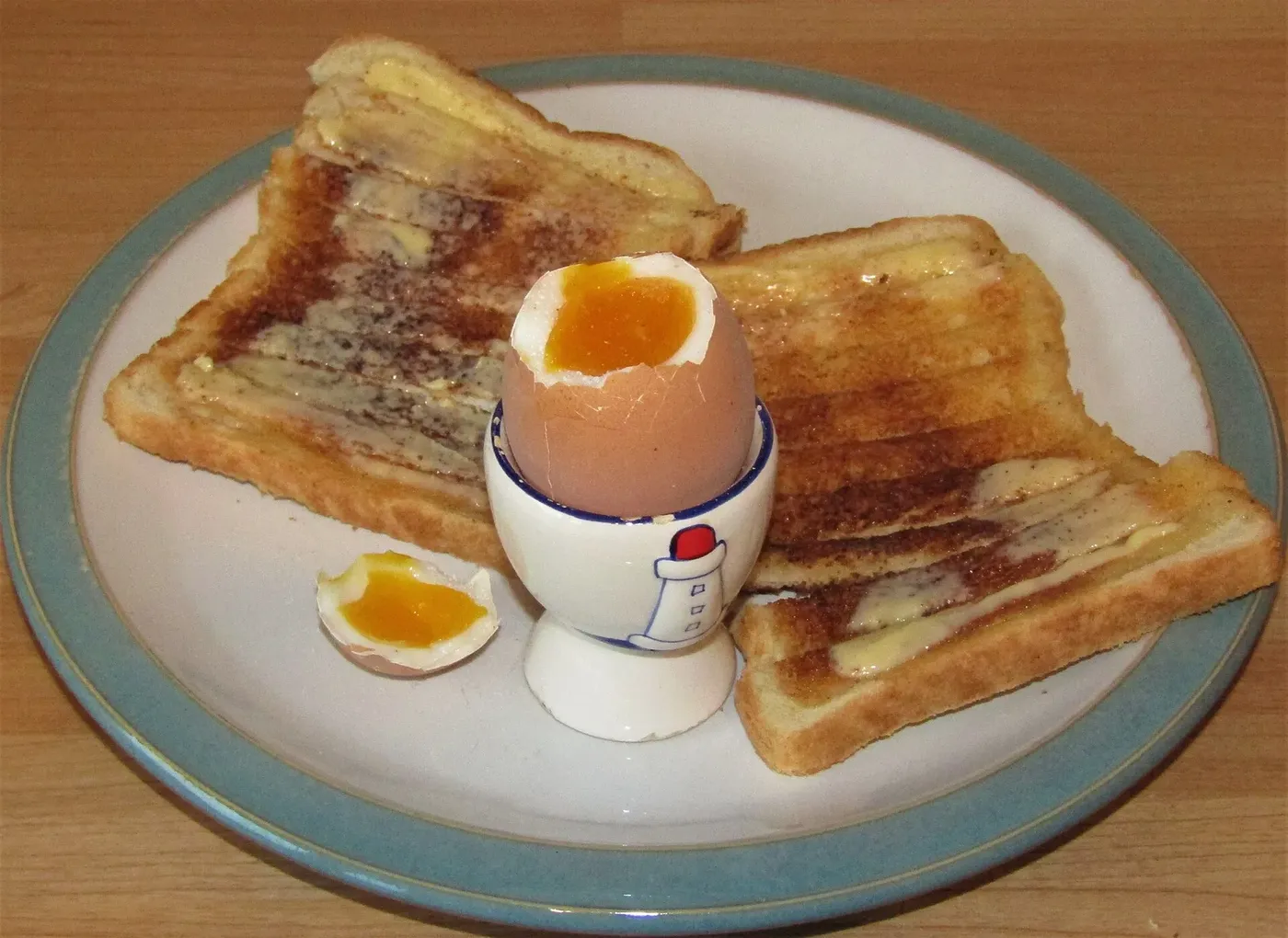
The soft-boiled egg deserves a mention of its own, because it is the textbook low GI breakfast and also the worst served. The egg itself is perfect, with no carbohydrate at all. It is the soldiers that make the difference: cut from white sliced bread, they drag the meal back up the scale. The same soldiers cut from a dense wholegrain loaf change the profile of the plate entirely, for the same gesture and the same time.
For a fuller savoury version, the avocado toast recipe ticks all three levers at once: dense bread, fat, and a protein topping. And if the constraint is gluten rather than sugar, the gluten-free breakfast deals with the case of oats, which raises a separate question.
What the glycaemic index does not cover
Three ideas circulate widely and deserve to be set aside.
- Low does not mean low calorie. Nuts and cheese have no index or a very low one and are energy dense.
- Unrefined sugar is not slow sugar. Its colour makes little difference to how fast it is absorbed.
- No added sugar does not mean low index. A fruit juice with no added sugar is still a sweet liquid without fibre.
Frequently asked questions
What is a low GI breakfast?
It is a breakfast whose carbohydrate foods have a glycaemic index of 55 or below, the conventional threshold for low. In practice it means replacing white bread and puffed cereals with wholemeal sourdough or oats, and always pairing those carbohydrates with protein and fat, which slow the absorption of the whole meal.
Which morning foods have a low glycaemic index?
Eggs, cheese and fish have no glycaemic index at all since they contain no carbohydrate. Among carbohydrate foods eaten in the morning, raw oats, wholegrain bread, plain yoghurt, fromage blanc, berries, apple and nuts are the lowest. At the other end, baguette, corn flakes, sliced white bread and puffed rice cakes are among the highest.
Is porridge low GI?
It depends on how it is made. Raw oats simply soaked cold keep a low glycaemic index. The same oats cooked at length in liquid see their index rise markedly, as cooking gelatinises the starch and makes it faster to absorb. Porridge prepared cold the night before is therefore preferable to porridge simmered in a pan.
Does orange juice raise blood sugar?
A juice, even freshly squeezed with no added sugar, delivers the fruit’s sugars without its fibre, which stayed behind in the pulp. It is therefore absorbed faster than a whole orange for the same amount of sugar. Eating the fruit rather than drinking it is the simplest way to lower the glycaemic index of a breakfast.
Should sugar be cut out of breakfast?
The point of a low GI breakfast is not to remove carbohydrates but to slow their absorption. The three levers are pairing them with protein and fat, choosing lightly processed foods, and limiting cooking. A breakfast with no carbohydrate at all is not a goal in itself.